
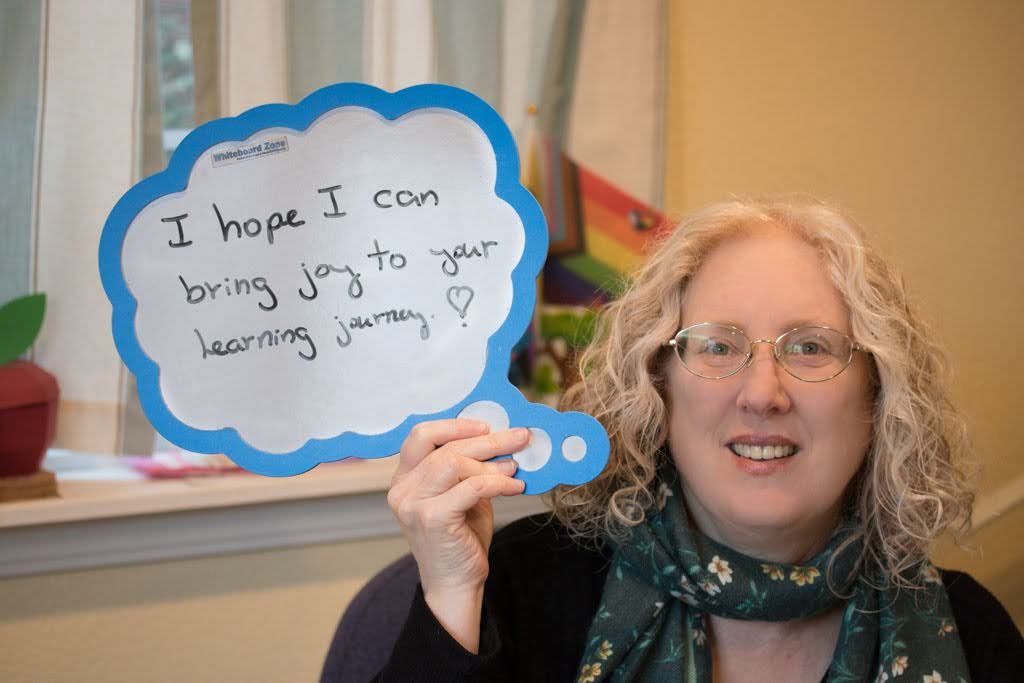
The first step for any of these services is to contact me via email, text, or phone. We’ll set up a free short consultation meeting on Google Meet. The goal of this first online meeting is for us to meet, listen to each other, and learn about your child. We will collaboratively figure out the steps to help your child and whether I am a good fit for your child’s needs at this time.
Educational therapists focus on helping students learn how to learn. We are equipped with a deep understanding of many learning differences, neurodivergence, and how learning happens in the brain. We use an interdisciplinary approach that combines understanding how our brain learns with a whole-child-focused therapeutic approach. We work with students with different learning disabilities, such as dyslexia, dyscalculia, dysgraphia, other language-based challenges, math anxiety and aversion, and visual and auditory processing issues. We also support students who have ADHD, executive function challenges or are on the autism spectrum. In our practice, we provide personalized instruction, remediation, and strategies for future learning. The goals and purpose of the educational therapy process are to support students in becoming confident learners who enjoy learning, feel good about themselves, become lifelong learners, and can confidently and compassionately advocate for themselves.
Educational therapists understand and support the whole child and address cognitive, emotional, and social factors impacting learning. They can also support the IEP and 504 processes and, if needed, serve as case managers, collaborating with family, teachers, and other professionals involved in the client’s life.
Educational Therapy

I dedicate the first few sessions to establishing trust and conducting informal assessments. Connection and trust are essential to my work with you and your child. I invest time in connecting with your child and creating a safe space to work. That safe space is where we’ll work on remediation, take risks in reading and math, and celebrate their gifts. We will also develop and use their metacognitive abilities and empower their self-acceptance and self-advocacy. We also work on establishing and improving executive function (EFs) in the context of our learning.
I usually meet with students twice a week, but the frequency is always individualized and can change throughout our work. I weave a lot of games into our work for practice, brain breaks, and formative assessments.
I am always(!) more than happy to meet with parents, provide a safe space to talk about their concerns and offer advice and guidance.
I usually add a short summary to the monthly invoice, and if you want more updates, I am happy to provide them.
Educational Consulting

- Is your gut feeling telling you that something is not going well for your child in school?
- Does your child have meltdowns by the end of the day?
- Do they wish they could be sick and stay home?
- Do you see signs of learning difficulties similar to what you have seen in the past?
- Did your child go through an assessment in school, and you need help reading between the lines of all the data and percentiles?
- Do you feel your child needs help, and you are unsure where to start?
- Are you considering different schooling options?
If you answered yes to any of these questions you will benefit from educational consultation.
I can provide advice, an overview of the options and sequence, and a demystification of some terms and worries you might have.
The first consultation is short and free. In these 20 – 30 minutes, I’ll ask you to tell me about your child, what you see, and the main concerns that brought you to talk to me. I will tell you a bit about what I do, how I work, if and how I can help your child and family, and what I believe would be the best course of action.
What can you get from Educational Consulting?
The goal of a consultation is to clear confusion, find a sense of direction, gather information about options, opportunities, and rights, and find a new balance for any inner conflicts you might have regarding your child’s education.
Here are examples of questions I can address:
- What is the right educational path for my child?
- Would another year at Preschool, Pre-K, or K benefit my child?
- Is homeschooling the right path for my family? How could I make it work? What requirements make homeschooling legal? What about socialization? If directly teaching my child yourself is not a good fit, is homeschooling still an option? What resources, mentors, and support groups are available for homeschooling?
- Where do I start seeking help for your child?
- Does my child need a 504 or an IEP? Can you help me apply for services through my school? Would you advocate for my child in the IEP process and meetings?
- Does my child need a complete psychoeducational assessment? Which neuropsychologist would be best for my child? Can you explain my neuropsychological report to me?
- What about college? What options are relevant for my child?
- Are there accommodations in college?
Homeschooling Support

Have you been considering homeschooling but been overwhelmed by the idea of taking such a big step into the unknown?
While homeschooling is not for everyone, there are many legal ways to design the educational path that best suits your child and family.
Homeschooling has brought the joy of learning back to our family, and to so many families I have met and supported. I hope you’ll allow me to share the options with you and demystify some myths, misconceptions, and fears around homeschooling.
Homeschooling is one of the best ways to support Twice-Exceptional students and bring back that spark of innate wish to learn that is in us from the day we are born.
NVC Coaching
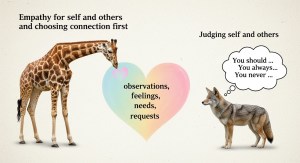
I learned Nonviolent Communication (NVC) in 2005 and have been leading the life of an NVCer ever since.
The fundamental belief of NVC is that all people share universal needs. Not all needs are alive at all times. Some feelings come up when needs are being met, and we experience other feelings when needs are not being met. There are no good or bad feelings. Our feelings are our own, valid, and worth acknowledgment and accepting space.
A practice group will strengthen our connection to our hearts and invite us to connect with other people in a heart-to-heart way.
In a practice group, we’d work on situations relevant to you and your life at work and home. Examples of content for practice group:
- How can we move from evaluation to observation?
- How can we identify our feelings and distinguish between false and true feelings?
- Learn how to connect feelings to met and unmet needs.
- Construct a request from ourselves and/or others, not a demand.
- Play with the NVC dance floor.
- Turn every communication into a celebration of deeper and more authentic connection.
- How do you say and hear NO in NVC?
- How can we express gratitude and accept it as well?
- What is empathy, and what are some obstacles to it?
- How do you give yourself silent empathy, and what are the benefits?
- How do you receive and express anger?
- How do we mediate between children?
